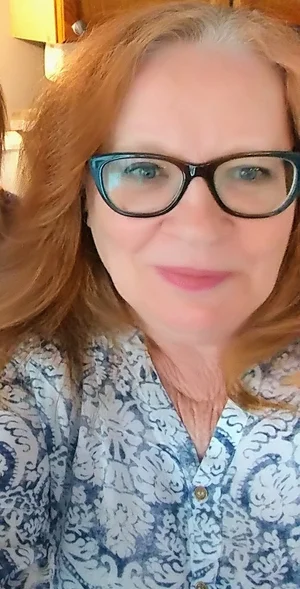
My Inspiration…..
The list of names that inspired me is very long. It begins when, as a very young child. My father, Richard Davis, taught me to watch light and listen for silence while sitting in front of his camera for what seemed like hours. From him, I learned patience, the way a single quiet hour can reshuffle what you thought you knew about a subject. My grandfather, George Davis, also communicated through his artwork. He sketched and painted his way through a war that ultimately took his life at a very young age. The small letters and drawings he sent home to his young wife and their three-year-old son became a catalyst, quiet, persistent proof that a life could be lived through making. Those pages of ink and wash held more than images; they held a voice, a presence, a legacy.
His son, Richard, grew up without a father. Yet George’s creative spirit lived on in him. From the small ink-drawn Donald Duck and Mickey Mouse when he was 3 to my grandfather's traveling suitcase, which housed George's few remaining belongings. Richard, my father, carried that inheritance not as a burden but as a seed that he planted in our family. He cultivated a creative mind and an open, searching soul, and in turn, he passed them on to his children. My grandfather’s tiny suitcase resides under my bed. The lineage of art in our family is less about technique and more about transmission: the way an image can speak across absence, the way making can knit together generations.
When I pick up a brush or set a charcoal stick to paper, I think of George Davis, my grandfather, sketching in the margins of a letter, imagining his home from a distant ship. I think of Richard, my father, teaching me to see through photography and books—how to find a drawing in the world’s light and shadow, how to trust that a small mark can carry meaning. My practice is a continuation of that conversation: an answer, a question, and an inheritance all at once.
After that come the old masters—the steady, patient teachers who do not need chatter. I owe them the discipline of observation and the humility to let a painting take its shape. From Leonardo I learned the architecture of a face and the importance of thinking in layers. From Titian, I took color’s capacity to breathe life into flesh. From Caravaggio, I learned the drama of light against dark and the moral force of unvarnished truth. Rembrandt taught me how to carry time in a brushstroke, to suggest aging and memory rather than outline them. Vermeer showed me the quiet power of a domestic moment and the alchemy of light on surfaces. Velázquez modeled honesty and restraint, a refusal to flatter, and the dignity of those depicted. From Poussin I took structure and the reasoned placement of figures; from Goya, the reminder that art can be witness and indictment. I find in Holbein the cool precision of line and in Fra Angelico a gentle, devotional clarity.
Beyond the canonical names are those whose influence is subtler: the portraitists who taught me how hands tell a life, the plein-air painters who taught me weather as a subject, the print-makers who taught me to value mark-making as language. Some sculptors taught me to imagine volume without shadow, poets who taught me how silence can be as expressive as a painted sky, and musicians who taught me proportion and tempo in composition.
Contemporary voices have also kept me honest. Teachers, peers, and students—artists whose work challenges my assumptions—have been indispensable. Galleries that show work with restraint, conservators who reveal the techniques beneath varnish, critics who force clarity with tough questions: all these people form a community of influence as important as any individual genius.
There are also unnamed teachers: the anonymous craftspeople whose mastery of materials I study in museums, the restorers who rescue color from decay, and the everyday people who let me paint them. The city streets at dawn, a single hymn in an empty church, the way an old door hinges—these too are names in a long list, less literal but no less formative.
Art for us has been a way to persist, to remember, and to communicate what words sometimes cannot. It is my grandfather’s voice and my father’s patience speaking through my hands. That is my inspiration. My gratitude extends to everyone in my family, but most of all my husband Daniel, who supported me through eight years of fine art training and my countless hours at the easel, while our home and daily life became my training ground.
Years of support and inspiration for me as an artist are cumulative: an inheritance of love, temperament, and ethics. I have drawn from everyone around me, translated all their input, and try to give back one brushstroke at a time.